
Understanding the Average Day Rate for Forestry Mulching & Land Clearing
First and foremost, I think it is important to point out that a day rate is typically more economical for property owner than getting a bid for the job. Bidding the job always seems more budget friendly to the property owner because they have an exact budget for what they want done. The problem with that mindset is that they don’t take into account the operator having to add extra time on to the bid in case they are wrong on how long it takes. All contractors will pad their bid to control for unforeseen issues that add time to the job. S3 Land Management typically operates on a day rate, because most homeowners only need 1-3 days of work because of how efficient our machines are. If the job is more than 3 days, we will most certainly give a bid if the jobsite isn’t too far away. Anything over 3 days definitely should get a bid, but chances are, your job can be completed in under 3 days, and since our rates are set on our pricing page, you know exactly what your cost will be upfront.
What Is Forestry Mulching?
Before diving into rates, it’s important to understand what forestry mulching entails. This method uses specialized equipment, typically a skid steer or track loader with a mulching attachment, to shred trees, shrubs, and vegetation into mulch. The resulting mulch is left on-site, enriching the soil and preventing erosion. Forestry mulching is the fastest and best way to remove small trees and undergrowth on any land clearing project.
Drum mulchers are much better than brush cutter attachments or disk mulchers, due to the mulcher grinding below the surface of the ground. Contractors often purchase brush cutters or disk mulchers due to being 1/3-1/2 the cost of drum mulchers. The problem with these attachments is they leave a stob above ground for the tree to grow back or even puncture tires. Forestry mulchers grind below the surface killing the brush and leaving a clean substrate. There is no advantage to brush cutters or disk mulchers over drum mulchers other than speed of cutting and cost to contractor. The one exception to this rule, is for pasture restoration, when speed is your primary concern and not finish quality. Brush cutters tend to work better for these applications, which is why we use them.
If you want clean forest, to reclaim your pasture, make trails, or other similar projects, forestry mulching with a drum mulcher is the way to go. S3 Land management exclusively uses drum mulchers for forest clearing projects.
Factors Influencing Day Rates
The day rate for forestry mulching services depends on several factors:
Type of Equipment:
Skid Steers and Compact Track Loaders: These machines are ideal for small to medium projects and cost less to operate. They usually command a lower day rate but often the best choice for most jobs because they are the best mix between efficiency and cost.
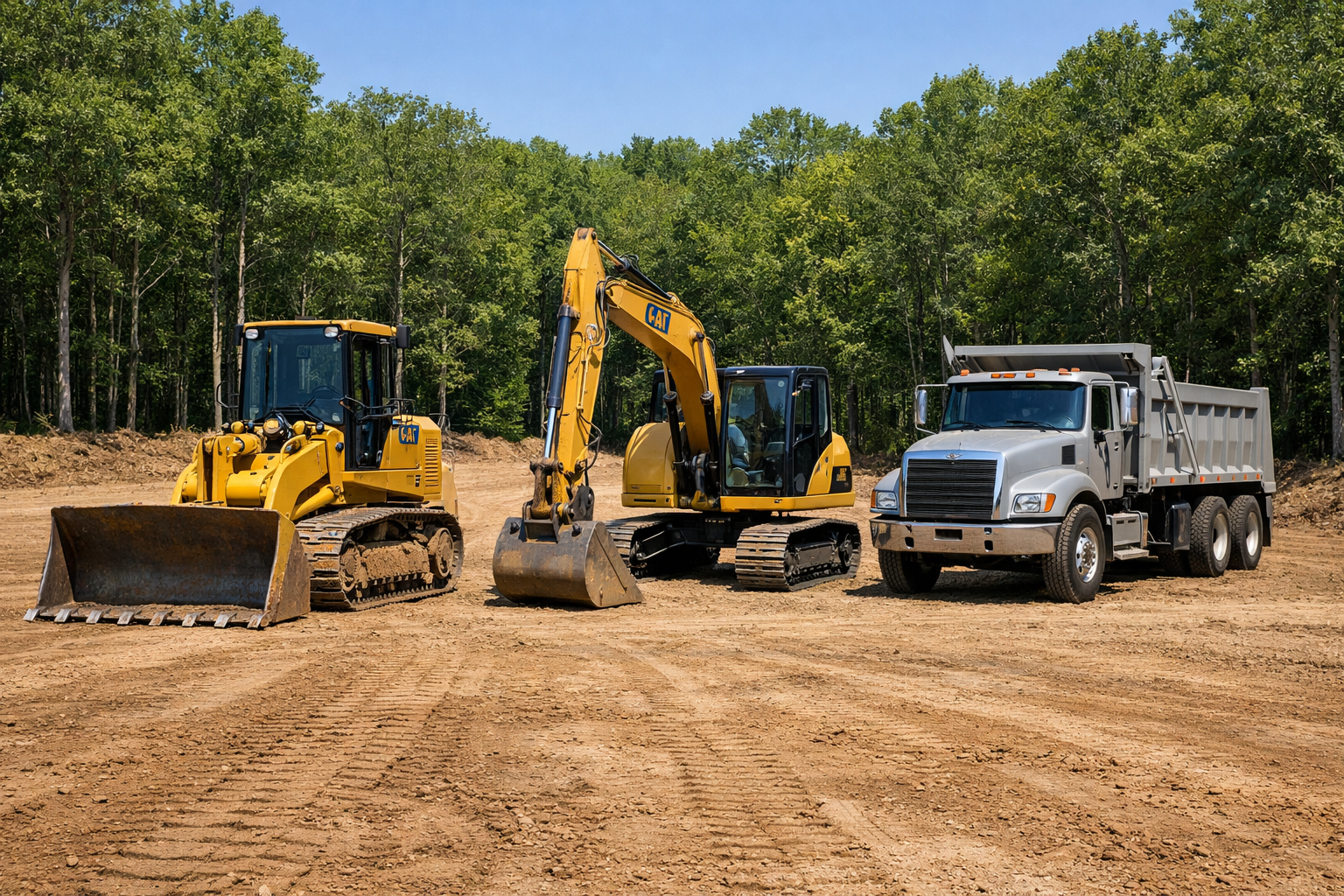
Excavator: Larger equipment, such as excavators with mulching heads, can handle steeper slopes and larger trees but come with higher operational costs. Keep in mind that excavators mulch much more slowly than Track Loaders. And very large mulching machines are INCREDIBLY expensive. Often costing 200-500k, so the compact track loader is often the most cost effective way to do any mulching job.
Larger Mulchers: The final option is dedicated mulchers that are 150-500 hp. These machines are INCREDIBLY expensive but the production gains you get from them are phenomenal. And on larger land clearing projects, you'll typically pay less per acre in the end, for choosing this over lower horsepower machines. They are typically reserved for clears over 3 acres in size, and power line right of ways, large farm projects, or other corporate jobs with bigger job budgets. If larger trees are needing removed, often times dozing with crawler track loader is your most economical option.
Operator Experience:
Experienced operators charge higher rates because their skill ensures efficiency and minimizes risks of equipment damage or incomplete work. Simply put, they get work done faster, costing you less.
Project Size and Complexity:
Larger or more complex jobs, such as clearing uneven terrain or areas with thick vegetation, typically cost more. Average acreage per day with a skid steer is 1 acre, but on many jobs depending on terrrain, we can clear up to 2 acres, but much of this is contingent upon size of trees, steepness of terrain, rocks in substrate, and other confounding factors.
Location:
Rates vary depending on distance from company’s home base, due to fuel costs traveling too a from jobsite. Steepness of terrain, and underlying things such as the amount of rocks or material that can damage the mulching unit can also play a factor. Rocks damage mulching teeth quickly and increase cost for operators.
Average Day Rates Across the Industry
While rates can vary widely, here are general guidelines:
Small to Medium-Sized Equipment:
Average rates for skid steers or compact track loaders with mulching attachments range from $1,700 to $2,500 per day, including the operator for a 110 HP machines (which you need). Don't hire a lower priced lower power mulcher on a day rate. You'll end paying more in the end. Compare apples to apples, make sure when getting day rate quotes, to always ask about machine HP.
Heavy-Duty Equipment:
Larger machines like large excavators or 150 hp or higher-powered mulchers command higher rates, typically between $2,500 to $4,000 per day. Typically average $3,000 per day. These make more sense economically once you get over 5 acres needing cleared, and is really your best option. The extra money is worth the production increases. You'll pay less in the long run.
Hourly Rates:
For smaller projects, some providers offer hourly pricing, usually $250-300 per hour, depending on equipment and location. But always have a minimum hour charge of at least 4 hours.
Discounts for Multi-Day Projects:
Many companies offer reduced rates for multi-day jobs, as transportation costs are spread over several days.
Hidden Costs to Consider
While day rates provide a baseline, there are often additional charges:
Mobilization Fees:
Transporting heavy equipment to the job site can add $200 to $500 to the overall cost, depending on distance. On bids this will already be factored in, but on day rates it might not be. Make sure to ask if any additional transportation fees will be added. Diesel costs for tranportation are expensive, and the contractor must also pay operators an hourly rate to drive there.
Permits and Compliance:
Some land-clearing projects require permits, which the client/contractor may need to secure. You might call DNR or local city office to see if permitting is required. For mulching permits are very rarely required, even in city limits. Dozing or large tree removal often requires them with the Department of Natural Resources.
Cleanup Services:
While mulching reduces the need for debris removal, additional cleanup or grading services may incur extra charges. If you want a finely raked and graded surface, that is extra on top of standard mulching costs.
How to Choose the Right Service
Choose the Right Machine:
Compact Track Loaders are best for most brush and land clearing jobs. Anything 8” and under. Grinds trees and brush to mulch, and goes 1-2” below soil. But only with an open drum mulcher and carbides. Bite limiter mulchers cannot subsoil but are faster at processing above ground material. In Missouri, always choose an open drum due to so many rocks. Bite limiter machines will be slower and can't mulch to soil grade without equipment damage.
Excavator if you need large trees or stumps removed. Often the best choice for hillsides or steep terrain. It’s the best option for large tree removal land clearing projects, if you need topsoil to remain intact. But the downside is its more costly and slower than a crawler track loader. Most total land clearing projects requires a 30-60k lb machine. Anytime you go over a 40k lb machine, transportation costs go up substantially, hence why we keep machinery under 40k in weight.
Crawler Track Loader if you need to clear lots of large trees and don’t mind topsoil removal. Fastest option for large trees, but often destroys topsoil. An example would be a 36,000 lb CAT 953c, which is what we use.
Check Reviews and References:
Choose an experienced operator with a solid track record to ensure quality work.
Clarify the Scope:
Discuss the project details, including terrain, vegetation density, and any additional services needed, to avoid surprises.
Negotiate Multi-Day Discounts:
If your project requires multiple days, inquire about reduced rates for extended work.
Is It Worth the Cost?
Forestry mulching may seem expensive, but it often delivers the cheapest price to clear by far. Compared to traditional land-clearing methods like bulldozing, mulching is quicker, environmentally friendly, and eliminates the need for debris hauling which is extremely expensive. It leaves nutrient-rich mulch on-site, it also promotes long-term soil health. It’s just the best option for most brush and small tree removal projects.
Conclusion
The average day rate for forestry mulching ranges from $1,700 to $2,500, depending on equipment size, operator expertise, and project requirements. While the upfront cost might seem high, the efficiency and sustainability of this method often make it a worthwhile investment. Whether you’re clearing land for development, agriculture, or environmental purposes, understanding these rates will help you budget effectively and choose the right service for your needs.
If you have any questions about cost or what we can do for your project, don’t hesitate to reach out. We always lean towards the cheaper side of the industry standard costs, due to the fact that we are mostly debt free and don’t depend on this income for our basic needs. We are a farm located in central Missouri

